A small living room does not have to feel crowded, unfinished, or limited. The most effective small living room ideas start with the way the room needs to work, then use furniture placement, visual breathing room, storage, lighting, and a few intentional decorative layers to support that function.
Whether you are furnishing an apartment, working with a narrow room, sharing the space with family, or simply trying to make a compact room feel calmer, the goal is the same: make every piece earn its place without making the room feel over-designed.
Use the ideas below as a flexible framework rather than a rulebook. Your room may need a sofa and TV, a sectional, a dining zone, a fireplace arrangement, or extra storage—and the best layout is the one that makes those needs feel natural.
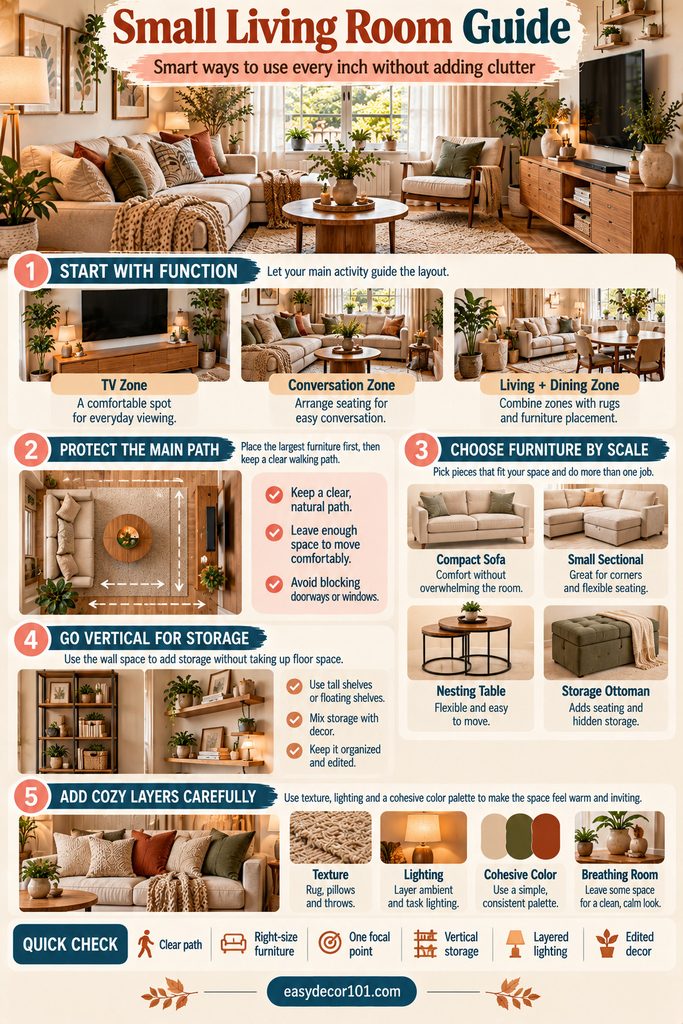
Start With the Room’s Main Job
Before buying anything, identify what happens in the room most often. A living room used mainly for conversation needs a different arrangement from one centered around television, reading, entertaining, or family time.
- TV-focused: keep the viewing angle comfortable and avoid filling the TV wall with unnecessary pieces.
- Conversation-focused: bring seating close enough to feel connected and use a compact table or ottoman.
- Family-focused: favor durable upholstery, flexible seating, and storage that is easy to reach.
- Apartment-focused: prioritize movable, multi-use furniture and pieces that visually stay light.
- Dining combination: define the living and dining zones without blocking the main walking route.
Choose a Layout That Protects Open Space
In a compact room, furniture arrangement often matters more than the number of decorative objects. Start by marking the natural paths through the room. The goal is not to leave every inch empty; it is to prevent the useful space from being interrupted.
Float the sofa when the room allows it
A sofa does not always need to be pushed against a wall. Floating it slightly can create a clearer boundary between the living area and another zone, especially in an open apartment. Use the space behind it for a slim console, narrow storage, or simply breathing room.
Use corners deliberately
An unused corner can become a reading chair, floor lamp, compact bookcase, plant grouping, or small storage zone. If the room is narrow, avoid filling every corner just because it is available. One intentional corner is often more effective than several small objects.
Consider the longest sightline
When possible, arrange major pieces so the room reads clearly from the entrance. A clean sightline makes a small space feel easier to understand and can reduce the visual impression of crowding.
Pick Furniture for Scale, Not Just Style
Small living room furniture ideas are not about buying miniature versions of everything. A few appropriately scaled pieces usually work better than many undersized pieces that leave the room visually busy.
- Choose a sofa that leaves enough room for the main walking path.
- Consider an apartment-size sectional when you need generous seating without several separate chairs.
- Use nesting tables, stools, or an ottoman when flexible surfaces matter.
- Look for furniture with visible legs or open bases when you want more visual floor area.
- Prefer pieces that solve more than one problem, such as storage ottomans or compact shelving.
For renters, prioritize pieces that can move with you. A freestanding shelf, floor lamp, compact cabinet, or movable coffee table can provide function without depending on permanent changes.
Make Storage Work Vertically
When floor area is scarce, the walls become valuable real estate. Vertical storage can hold books, baskets, media equipment, and decorative objects while keeping the footprint relatively small.
Open shelving can make a room feel lighter, but it works best when the display is edited. Mix useful items with a few decorative pieces and leave some empty space. Closed storage is helpful for anything that tends to create visual noise.
Use the TV Wall as a Design Opportunity
A television can dominate a small living room, so treat the TV wall as part of the overall composition rather than an isolated technical zone. A slim media console, floating shelves, or a simple built-in look can give the wall purpose without adding unnecessary bulk.
Keep surrounding decor controlled. One or two shelves with carefully chosen objects can be more effective than covering the entire wall. If the TV is mounted, use the freed floor space to maintain a cleaner circulation path.
Create Coziness Without Adding Clutter
Cozy small living room ideas usually come from texture, lighting, and proportion rather than from adding more objects. A soft rug, comfortable throw, warm lamp, curtains, and a restrained group of personal pieces can make a compact room feel welcoming.
Use repetition to create cohesion. Repeating a neutral tone, wood finish, or accent color across a few pieces helps the room feel intentional. Too many unrelated colors and materials can make a small room feel fragmented.
Try a simple layering formula
- Start with a calm base: sofa, walls, and larger furniture.
- Add one grounding layer, such as a rug or coffee table.
- Add soft texture through pillows, throws, and curtains.
- Finish with a few vertical or wall elements such as art, shelves, or a plant.
- Remove anything that does not support the room’s function or visual balance.
Use Color and Lighting to Shape the Room
Color can help establish a calm backdrop, while lighting adds depth after dark. Neutral walls are not mandatory, but a consistent palette can make furniture and decor feel less visually fragmented.
For small living room color ideas, consider a light neutral base with one or two supporting tones. If you prefer darker or richer colors, use them intentionally on a feature wall, upholstery, artwork, or smaller accents rather than spreading many competing shades throughout the room.
Layer lighting instead of depending on one ceiling fixture. A floor lamp, table lamp, wall light, or focused reading light can create separate zones and make the room feel more dimensional in the evening.
Make a Narrow Room Feel More Balanced
Narrow spaces need special attention to depth. Avoid placing bulky furniture where it creates a bottleneck. A compact sofa, shallow media piece, slim side table, and vertically oriented decor can help preserve a clear central path.
Use the far end of the room as a visual destination: a window, artwork, plant, fireplace, or well-styled wall can draw the eye through the space instead of making the room feel like a corridor.
Combine a Living Room With Dining Space
When a small living room also has to accommodate dining, define each zone without building a hard visual wall between them. A rug can anchor the seating area, while the dining table can sit closer to the kitchen or wall it naturally serves.
Round or compact dining tables can work especially well when circulation around the table is tight. Keep the boundary between zones visually simple so the combined room still reads as one coherent space.
Small Living Room Ideas on a Budget
A small-room makeover does not require replacing everything. Start with the pieces that affect function most: furniture placement, lighting, storage, and the visual weight of large objects.
- Rearrange existing furniture before shopping.
- Move bulky decorative pieces out of circulation paths.
- Use baskets or boxes to group small items.
- Refresh textiles before replacing major furniture.
- Shop for one high-impact piece rather than many small accessories.
- Use removable wall decor when permanent changes are not possible.
A Simple Small-Room Checklist
- Identify the room’s main activity.
- Measure the largest furniture before buying anything.
- Protect the main walking path.
- Keep furniture proportional to the room.
- Choose one clear focal point.
- Use vertical storage where practical.
- Edit open shelving instead of filling every shelf.
- Consider furniture with more than one function.
- Keep the TV wall visually controlled.
- Use a rug to anchor the seating area.
- Layer at least two types of lighting.
- Repeat a small number of colors or materials.
- Use corners intentionally.
- Leave visual breathing room around major pieces.
- Choose movable solutions for rental spaces.
- Keep everyday clutter contained.
- Reassess furniture placement before adding decor.
- Use mirrors or reflective finishes only where they support the overall composition.
- Keep pathways clear.
- Remove pieces that no longer serve the room.
FAQ
How do I make a small living room look bigger?
Start with a clear circulation path, appropriately scaled furniture, controlled visual clutter, and a consistent color palette. Vertical storage and layered lighting can also make the room feel more organized and open.
What furniture works best in a small living room?
Look for appropriately scaled sofas, compact sectionals, nesting tables, storage ottomans, slim consoles, and furniture with open or visible bases. The best choice depends on the room’s layout and how you use it.
Can I use a sectional in a small living room?
Yes. A sectional can consolidate seating into one defined footprint. Measure carefully and choose a configuration that protects the main walking route instead of simply choosing the largest sofa that fits.
How can I decorate a small living room without making it cluttered?
Choose a limited palette, group accessories instead of scattering them, use vertical surfaces selectively, and prioritize pieces that add function or meaningful visual interest.
How can renters improve a small living room?
Focus on movable furniture, lamps, textiles, freestanding storage, removable art, and flexible layouts. These changes can improve the room without requiring permanent alterations.
The best small living room ideas are not about squeezing more into less space. They are about choosing what matters, arranging it deliberately, and giving each layer enough room to breathe. Start with function and layout, then add storage, lighting, texture, and personality until the room feels both useful and comfortably yours.
25 Small Living Room Ideas to Explore
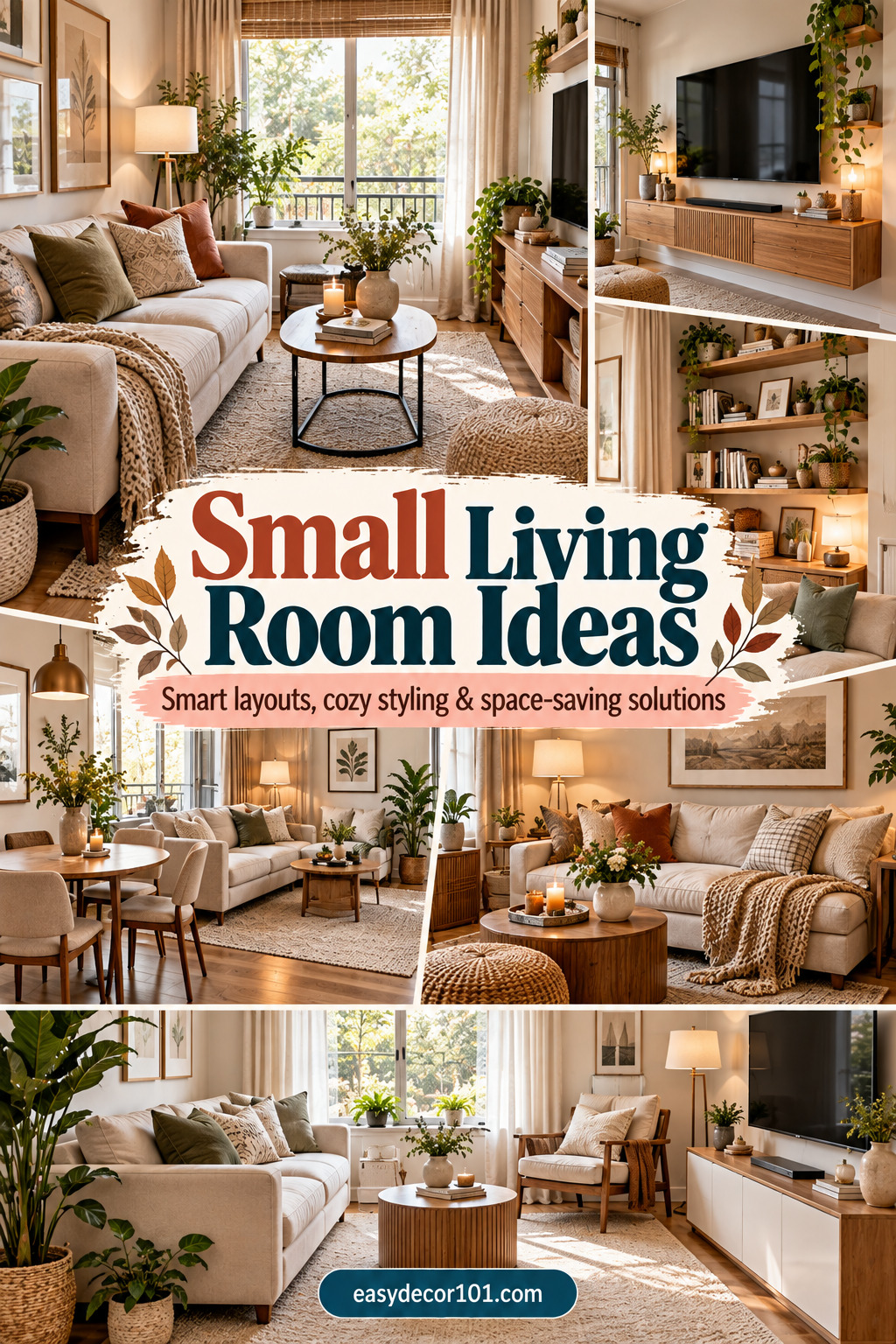
Use this visual gallery as a reference when you are comparing layouts, storage approaches, furniture proportions, color directions, and decorating styles for a compact room.
TV Wall With a Slim Media Focus

A compact living room with a streamlined TV console and wall-mounted screen shows how a single media zone can become the visual anchor.
The controlled composition keeps the eye on one functional wall and avoids filling the room with multiple bulky media pieces.
Adapt the approach with a slim console, floating storage, or a simple wall treatment that leaves the main walking path open.
Wood Slat Divider for an Open Plan

Vertical wood slats create a light visual divider between living areas while preserving a sense of openness.
This approach is useful when a compact room needs definition without sacrificing light or making the space feel boxed in.
Use a partial divider, open shelving, or another see-through element to create zones while keeping circulation visible.
Compact Sofa for a Small Footprint

A compact sofa anchors a small living room without dominating the available floor area, leaving room for movement around it.
The example shows why sofa scale matters more than simply choosing the smallest possible furniture.
Measure the sofa footprint first, then build the coffee table, side table, and lighting around the remaining usable space.
Minimalist Layout That Feels Spacious

A restrained living room uses a simple sofa, limited decor, and open floor area to create a calm, spacious impression.
The minimalist approach works because fewer competing elements make the room easier to read.
Keep only the furniture that supports the room's main activities and use a consistent palette to connect the remaining pieces.
Living + Dining Combination

A small living area and dining zone are arranged together with coordinated finishes and a clear visual relationship.
Defining the two areas without separating them completely helps a combined room feel intentional rather than crowded.
Anchor the living area with a rug and keep the dining table close to its natural kitchen-side location while preserving a clear route between zones.
Minimal White Living Room

A light-toned living room pairs simple furniture with a restrained decorative palette and plenty of visible floor area.
The limited color range makes large pieces feel visually connected instead of fragmented.
If you prefer color, keep the base calm and introduce one or two accents through pillows, artwork, or a small chair.
Space-Saving Storage

A compact living room incorporates storage vertically, keeping books and everyday items organized without adding another large floor-standing cabinet.
Vertical solutions are especially useful when the footprint is limited but storage needs are not.
Try tall shelving, floating shelves, or a narrow storage unit, then leave some open space so the wall does not become visually heavy.
Cozy Apartment Living Room

A compact apartment living room layers a comfortable sofa, soft textiles, and warm finishes without overloading the room with accessories.
The room feels welcoming because the cozy effect comes from texture and composition rather than quantity.
Repeat a few warm tones across textiles, wood, and lighting, then edit decorative pieces until the room still feels easy to move through.
Plant-Filled Corner

A small sofa and a cluster of plants give an otherwise underused corner character while keeping the main seating area visually connected.
Plants can add height, texture, and personality without requiring another large piece of furniture.
Use one tall plant with smaller companions, or substitute artwork and a floor lamp if natural light is limited.
Cream Sectional + Chairs

A cream sectional is paired with additional chairs in a carefully composed small living room, showing how seating can be grouped without making the room feel chaotic.
A sectional can be efficient when its shape follows the room rather than forcing furniture into separate clusters.
Measure every side of the sectional and protect the main path before adding chairs; fewer pieces may create a stronger arrangement.
Green Cozy Corner

A green-toned seating corner combines plants, soft furnishings, and natural visual elements for a cozy small-space effect.
A single strong color family can give a compact room identity without requiring many different decorative colors.
Repeat the accent in small doses—such as a pillow, artwork, or plant pot—rather than matching every object.
Small Apartment Living Room

A compact apartment living room demonstrates how seating, decor, and circulation can coexist within a restricted footprint.
Apartment rooms benefit from furniture that serves a clear purpose and visual choices that keep the space coherent.
Choose movable pieces and keep the layout flexible enough to adjust when you need more open floor space.
Furniture Placement

The furniture arrangement demonstrates how sofa placement can create a usable conversation area while protecting the room's natural route.
In small rooms, placement can change the experience more dramatically than adding new decor.
Mark the main walking path first, place the largest seating piece second, and add smaller tables or chairs only where they do not interrupt movement.
TV + Floating Shelves

A wall-mounted TV is paired with floating shelving, creating a compact media zone that uses vertical space.
Floating storage can visually reduce the footprint of a media setup while providing a place for books and selected decor.
Keep shelf groupings edited and avoid filling every available surface; the empty space is part of the design.
L-Shaped Sofa in a Rectangle Room

An L-shaped sofa helps define a rectangular living room while keeping the seating area visually unified.
Following the room's long dimensions can create a more natural furniture arrangement than forcing separate pieces into every corner.
Pair the sofa with a compact coffee table and keep the opposite side relatively light to preserve a clear visual path.
Boho TV Wall

A boho-inspired TV wall combines warm wood, soft textures, and decorative details around a clearly defined media area.
The style works best when the palette and materials repeat rather than when every boho accessory is used at once.
Choose two or three signature materials—such as wood, woven texture, and greenery—and let the rest of the room stay quieter.
Compact Modern Living Room

A compact modern living room uses simple furniture forms, restrained styling, and a cohesive neutral palette.
The clean lines help the room feel organized and make the available floor area more noticeable.
Use one statement piece and keep supporting furniture visually simple so the room has a focal point without feeling busy.
Small Living Room Inspiration

A small living room combines seating, decor, and circulation in a compact composition that feels intentional rather than cramped.
The value of a visual example like this is seeing how several decisions work together instead of copying one object.
Take the principles—scale, spacing, focal point, and palette—and adapt them to your own room rather than recreating every detail.
Budget Organization

The space combines compact furniture with organized storage and decorative touches, illustrating how a small refresh can focus on function first.
Budget-friendly changes are often most effective when they solve a specific problem, such as cluttered surfaces or poor furniture placement.
Start with rearranging what you own, then add one affordable storage or textile update that improves the room's biggest pain point.
Bookcase as Room Divider

A bookcase helps separate the living area from an adjacent zone while also providing vertical storage and display space.
Dual-purpose furniture is valuable in compact rooms because it can define a zone without requiring another dedicated piece.
Choose an open or visually light bookcase when you want separation without blocking light, and keep the display selectively edited.
Scandinavian-Japanese Calm

A restrained interior combines warm wood, simple forms, and a calm palette for a small-space aesthetic with little visual noise.
The style demonstrates how fewer, better-connected elements can make a compact room feel composed.
Borrow the principles rather than the exact look: natural textures, simple silhouettes, warm neutrals, and intentional negative space.
Cozy Beige Small Space

A beige-toned living room uses neutral upholstery, warm surfaces, and compact furniture to create a comfortable small-space atmosphere.
A narrow neutral palette can visually connect different furniture pieces and make the room feel more unified.
Layer beige, cream, tan, and natural wood with texture changes so the room gains depth without needing many colors.
Big-Impact Small Living Room

The room demonstrates how furniture scale, wall styling, and a cohesive palette can create a noticeable design effect in limited space.
A small room does not need many decorative moments; one strong focal area can carry the composition.
Choose one area to emphasize—such as the sofa wall, TV wall, or fireplace—and keep surrounding elements supportive rather than competitive.
Open and Comfortable Layout

A compact living room balances a sofa, small tables, and decor with enough open floor area to keep the composition relaxed.
The open feeling comes from spacing and proportion rather than from leaving the room undecorated.
Use fewer, appropriately scaled pieces and leave small pockets of empty space around the furniture so the room can breathe.
Small Living Room With TV and Fireplace

A small living room brings a TV and fireplace into the same visual composition while keeping the seating arrangement functional.
When two features compete for attention, the surrounding furniture and decor need to support a clear hierarchy instead of adding more focal points.
Treat the fireplace and TV as one combined zone where possible, then keep the rest of the room quieter and comfortable.
Love these ideas? Follow @quinnhomedecorideas on Pinterest for more cozy, practical gift inspiration!